


Most founders treat investor updates like the top fire in this illustration.
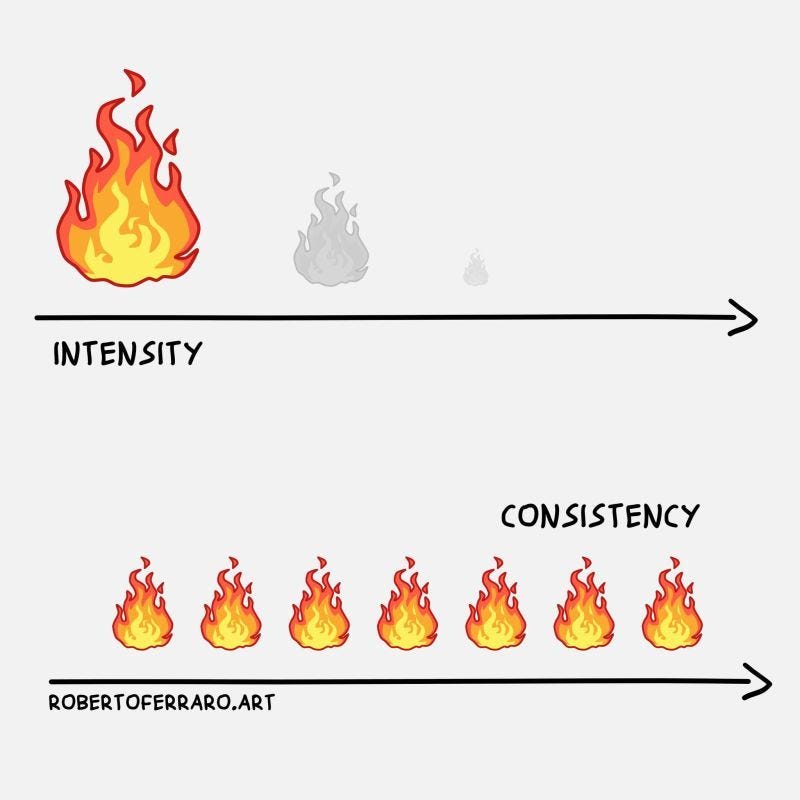
There’s a burst of effort when a fundraise is coming up. Polished updates, lots of outreach, plenty of energy. Then the round closes, the business gets busy, and the updates fade out until the next time the founder needs money.
The founders who raise most easily tend to do the opposite. They keep a small, steady fire going.
As Enrico Fioretti, an angel investor in our network, put it: “Some of the easiest fundraises I’ve seen started a year before the pitch. It just looked like a monthly email.”
A pitch shows a moment. Updates show a pattern.
When you start a round, investors who already know you are in a very different position from everyone else.
They’ve watched the company for months. They’ve seen what you said would happen and what actually happened. They don’t need to be convinced from zero.
That’s the real job of an investor update. Each one is a small, verifiable data point. Over time, those data points add up to something a pitch deck can’t give you: evidence of how you think, how you execute, and how reliably you do what you say.
You can make that track record visible on purpose. Start each update with a single line comparing last month’s plan to this month’s result:
Last month we said: We’d sign two pilot customers.
What happened: We signed one. The second slipped to next month because of a procurement delay.
Do that consistently and investors start to trust your forecasts, including the ones in your next pitch.
Send the update especially when the month was bad
This is where most founders go quiet. A bad month feels like the worst time to email investors. It’s actually one of the best.
A founder who writes honestly about a hard month tells investors something important: how they’ll communicate when things get truly difficult. That’s very hard to fake in a pitch meeting, and it’s exactly what investors worry about most.
Name what went wrong plainly. Add one sentence on how you’re responding. Then send it on schedule, like any other month.
Make it easy enough to keep doing
Consistency only works if updates are simple enough to sustain. Keep the same shape every time:
The same few numbers, so people can see the trend
What went well
What didn’t, said plainly
What you’re focused on next
One specific ask someone on the list could actually help with
Keep it short enough to read in two minutes. Pick a fixed send date. Reuse the same template every time. Pick a cadence you’ll actually keep. Monthly works well at the earliest stages when things change fast. Quarterly can work later. The cadence matters less than never breaking it.
If you want a full structure and an example update, our Founder’s Guide to Writing Effective Investor Updates walks through it section by section.
The quiet advantage
Most of the work of a fundraise happens long before the pitch. It happens in small emails, sent on boring Tuesdays, during good months and hard ones.
Start the pattern now. Your future self will be glad you did.